Imagine the profound impact scholarships have on students

In 2023, your gifts funded $52 million in scholarships and fellowships, including the prestigious Chancellor's Award at CU Boulder. 

Hear three award recipients share their aspirations, academic pursuits and long-term goals.
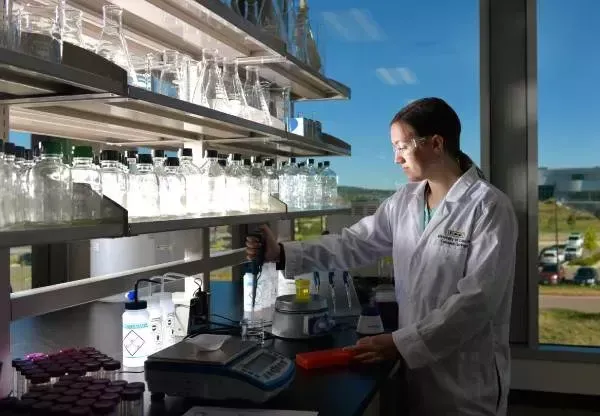
 

“My big dream was to make some sort of contribution to the MS community… just to make even one person’s life with MS a little bit better. And I feel like I’ve actually been able to accomplish that… so now I need to dream a little bit bigger.”

Brodie Woodall, CU Boulder ’23

Why not forge a new path?

Why not forge a new path?

UCCS first-generation student and former track athlete Kayla Waterman-Vandiver has her sights set on a PhD and a career in academia.
Why not forge a new path?

Why not forge a new path?

UCCS first-generation student and former track athlete Kayla Waterman-Vandiver has her sights set on a PhD and a career in academia.
Content Section

Kayla Waterman-Vandiver remembers the day in college when her dream career changed.

Waterman-Vandiver had planned to be a medical doctor from a young age and, with this in mind, was studying biology at the University of Colorado Colorado Springs (UCCS).

However, she began to consider a research career after a class in skeletal muscle physiology where Prof. Robert Jacobs opened her eyes to new possibilities. Waterman-Vandiver says her “aha” moment came when she received particularly affirming feedback on an assignment.

“Professor Jacobs told me he could see me flourishing as a scientist,” Waterman-Vandiver says. “That really was a pivotal moment for me because he was telling me I was on the right path.”

Jacobs' confidence in Waterman-Vandiver's academic abilities factored heavily in her decision to pursue postgraduate study in the biosciences rather than applying for medical school. Her new dream is to obtain a PhD and research type 2 diabetes, women’s health or sports medicine with a focus on female athletes.

People ask me why I want to stay in school, but I say, ‘Why not stay in school?’ Why not enjoy yourself along the way and learn as much as you can so you can make a bigger impact when you graduate?
– Kayla Waterman-Vandiver

“I know that six additional years seems like a really long time and people ask me why I want to stay in school,” she says. “But I say, ‘Why not stay in school?’ Why not enjoy yourself along the way and learn as much as you can so you can make a bigger impact when you graduate?”


Helping Students Reach Their Full Potential

Scholarships have made it possible for Waterman-Vandiver to stay in school and reach her goal of earning an advanced degree, a path no one else in her family has taken.

“I push myself because my mom in particular always felt like she had the potential to do more,” says Waterman-Vandiver, the youngest of six siblings.

Kayla Waterman-Vandiver with her parents Jason and Katrina at her high school graduation. 
As an undergraduate, she qualified for the Bruce and Anne Shepard Reach Your Peak Scholarship which covered most of her tuition costs.

“The scholarship was really helpful during my undergraduate years,” Waterman-Vandiver says. “It was my largest scholarship and it let me walk away with much less college debt.”

Other scholarships, such as the UCCS Chancellor’s Award and the UCCS Graduate Research Fellowship, also helped cover the cost of her undergraduate and graduate education.


Finding Motivation Through Athletics

Waterman-Vandiver flourished at UCCS both as a student and a track-and-field athlete. In 2019, 2020 and 2021, the team won the Rocky Mountain Athletic Conference Championships. Because of her outstanding performance, after her first year, Waterman-Vandiver was awarded an athletic scholarship.

“I really love track because it shows you a different side of discipline and determination than schooling and academics,” Waterman-Vandiver says.

kate


Kayla Waterman-Vandiver on the track at the Mountain Lion Fieldhouse.


Waterman-Vandiver and her teammates found their home at the Mountain Lion Fieldhouse. Made possible in part by donor support, the facility became a home base for the UCCS track-and-field team.

“It was awesome to be able to be done with our running workouts and go straight to the weight room,” Waterman-Vandiver recalls. “Having that one facility for all of us made us feel like more of a team.”


Exploring a Passion for Research

Being part of an athletics team also piqued Waterman-Vandiver’s interest in women’s health, which is now a focus of her research.

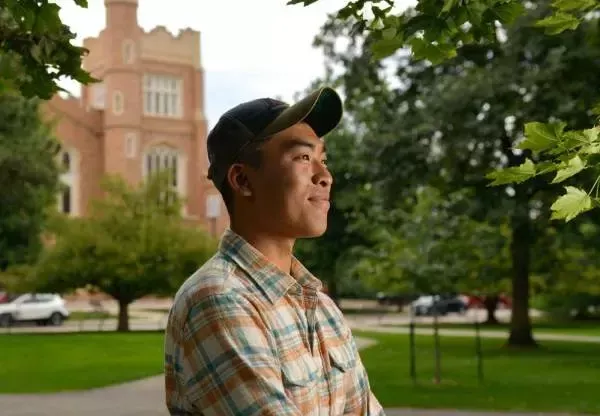
After graduating magna cum laude with her bachelor’s degree, Waterman-Vandiver hit the ground running as a graduate student. With Jacobs as her thesis advisor, she is working on two research projects, one which focuses on mitochondrial function in aging and type 2 diabetes and the other relates to treating hot flashes in menopausal women.

kate doing research

“I realized last year that there are very few women studied in scientific research,” she says. “So, I want to contribute to our understanding of women’s health by doing more research with female participants.”

Jacobs attributes Waterman-Vandiver’s growth and success at UCCS to her work ethic.  

“Her tremendous academic efforts at UCCS have allowed her the opportunity to pursue a doctoral degree in one of the nation’s preeminent laboratories studying human bioenergetics,” Jacobs says. “I am sincerely excited to see what Kayla’s future brings.”

Why not do what’s right by veterans?

A CU Boulder bridge program is helping veterans transition to university life.

Why not do what’s right by veterans?

A CU Boulder bridge program is helping veterans transition to university life.

Content Section

When Joey Morgan stepped foot on the CU Boulder campus in summer 2019, he felt like a 44-year-old stuck in a 24-year-old’s body.
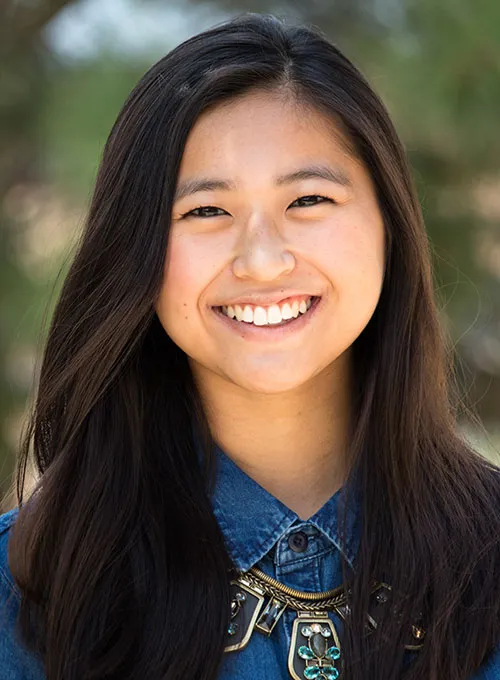
Just one year before, Morgan had completed a tour of duty in Syria, fighting alongside the U.S. Army’s Kurdish allies and witnessing the lead-up to the withdrawal of U.S. troops from the Middle East.

“War was like a fever dream,” Morgan says.


Welcoming Veterans to Campus

Kristina Spaeth, an academic advisor at CU Boulder’s Veteran and Military Affairs (VMA) office, says it is common for veterans like Morgan to feel out of place when they return to school. Spaeth has spent the last decade working with veterans who fought in the Global War on Terror including the conflicts in Iraq and Afghanistan. The veterans enrolled in college utilizing the Post 9/11 GI Bill.

These are people who have sacrificed so much of themselves for the rest of us. The very least that we can do is to treat them right and do the right thing for them. Why not do the right thing?
– Kristina Spaeth, Academic Advisor

Her work serves the VMA’s overarching mission, which is to support student veterans and their dependents and provide them with information and assistance with their GI Bill benefits. Through her work at the VMA, Spaeth realized that veterans needed a bridge program to help them acclimate to academic and social life on campus before starting classes.

Kristina Spaeth, VMA academic advisor, discusses course selection with Connor Greenberg, a bridge program participant and CU Boulder student

Kristina Spaeth, VMA academic advisor, discusses course selection with Connor Greenberg, a bridge program participant and CU Boulder student.


“These are people who have sacrificed so much of themselves for the rest of us,” Spaeth says. “The very least that we can do is to treat them right and do the right thing for them. At the time, creating the bridge program from nothing felt like the biggest challenge I’d ever encountered in my career, but it was like, ‘Why not do the right thing?’”

Working with Stewart Elliott, director of the VMA, Spaeth garnered the university’s support and launched the two-week summer bridge program in summer 2017 with 18 students.

Since then, the program has added a winter session and more than doubled in size, with 40 students in its 2021 summer cohort. The program provides intensive classes that enhance math, writing and research skills while also offering the opportunity for incoming veterans to network and form friendships.

Five years in, the bridge program is showing encouraging outcomes. Students who complete the program have a higher GPA and retention rate than those who do not.


Funding for Success

Private donor funding has helped the VMA grow over the years. Today, the office offers a range of services and support, including scholarships and student aid, career support, academic advising, tutoring, events and programming, a student ambassador program and more.


Student veterans study in the VMA student lounge

Student veterans study in the VMA student lounge.


“We are extremely fortunate to have significant financial support from foundations and private donors,” Elliott says. “This support has clearly transformed the CU Boulder VMA into a world class program supporting student veterans and veteran dependents who attend CU Boulder.”

As philanthropic support for the VMA has grown, so has support for the bridge program.

Spaeth says the program initially ran on a small budget from the university, but over time its success began to attract funding from private donors and organizations such as The Anschutz Foundation.  

“I think our donors saw that we were doing the right thing for veterans,” Spaeth says.  

Today, the bridge program is entirely donor funded. Philanthropic support enables the program to provide a $1,000 stipend to every student who completes the two-week program, up to 80 students each semester. In addition, donor support allows the program to compensate faculty and instructors who teach, speak on panels and connect with students.


Finding Purpose

Through the bridge program and other VMA programs, Morgan made friends and connected with civilians and veterans.

“At first, I didn’t know if I could effectively get along with civilians,” says Morgan, who is majoring in psychology. “But over time, I realized that there are people who want to know what we’ve been through in the service and that friends can be from anywhere, from different walks of life and any age from 25 to 75.”

That sense of belonging gave Morgan the confidence to forge ahead on an idea he had while visiting the grave of a friend’s father at Fort Logan National Cemetery in 2021.

“It was around the time that we were hearing about how the Taliban had taken over Afghanistan,” Morgan says. “While I was at the cemetery, the thought struck that we need a place that people will gravitate to, where they can reflect on what happened in the two decades, where veterans and civilians alike can mourn and remember the sacrifices of the survivors and the fallen – a place where we can meet in the middle, on common ground.”

After Morgan spoke to faculty involved with the bridge program about his idea, they connected him to the Global War on Terror Memorial Foundation and their plans for a war memorial on the National Mall in Washington D.C.


Joey Morgan at Old Main on the CU Boulder campus

Joey Morgan at Old Main on the CU Boulder campus


Morgan is now serving as a veteran advisor for the memorial. He hopes to contribute to the memorial’s design, which currently includes bas-relief sculptures, photo galleries, plaques with the names of those who died in the war and a garden with flowers and plants from the Middle East such as tulips, jasmine and irises.  

“The hope is that when someone visits who has been in these wars, they’ll feel a sense of recognition when they see the flowers,” Morgan says.

Spaeth says it keeps her motivated to see veterans like Morgan find a sense of purpose and place on campus.  

“Some find lifelong friendships. They do club sports together and spend holidays together,” she says. “That’s why it’s so personally rewarding to do this work.”

Campus
rohrbach


That’s what Mae Rohrbach learned in the UCCS dorms in the fall of 2013.

“We had to flush it multiple times until we got it fixed. I thought: There is so much water being wasted,” says Mae, now a senior studying geography and environmental studies.

Most students would fix it and forget it. But Mae and a couple classmates from her “Sustainable Me” environmental studies course knew this problem deserved a longer look.

“We thought about the toilets,” she recalls. A lot.

Specifically that about 200 of them used 3.5 gallons per flush. Efficient toilets use just 1.8 gallons, reducing costs and water usage. So Mae and her classmates worked with campus officials and sought funding to install more efficient toilets. By May, she and volunteers replaced the old commodes and smashed them into recycled materials for campus pavement.

“It’s come full circle,” Mae says of the Toilet Retrofit Project, which has saved UCCS about $15,000 in water costs.

She enrolled at UCCS partially because of its commitment to sustainability (the campus’ beauty didn’t hurt either: ”I love the views,” she says). During her campus tour, she happily spotted the university’s recycling and composting efforts, and she wanted to get involved. Mae spoke to campus sustainability leaders about volunteering and has spearheaded two major sustainability projects as a student at UCCS— the Toilet Retrofit Project and the installation of a dining hall vending machine called OZZI that lowers meal costs for students who choose reusable food containers. Mae wants to tackle one more project before graduating and heading to the Peace Corps: bringing non-potable recycled “grey” water to campus to save resources.

Mae knows this means major logistical hurdles, but she has put real-world skills—how to plan, coordinate with leaders and build a case for her ideas—into action. UCCS has taught her to view problems as opportunities to help: “This is something that could be changed for the better. What can I do about it?”

“Service is a core part of who I am,” she says. “My perspectives may change, but service will not. That will always be a part of me. You only have so much time on this planet, and what I want to do with that time is serve others.”

garrent Rose

What’s something about you that most people wouldn’t know if they were looking right at you?

Garrett Rose briefly considered the question and then wrote:

I get depressed a lot.

“I either didn’t know what to say or didn’t understand the question,” Garrett, now a senior at CU Boulder, recalls.

That was in early 2014 during an ice-breaker training session for the campus’ Gender and Sexuality Center. His peers didn’t think about it so deeply.

“Everyone else was like, ‘I have three dogs at home,’ ” he remembers.  

Garrett learned his answer wasn’t too personal.

“Somebody afterward said that my sadness was welcomed here,” he says. “It was one of the moments where I felt like I could be myself. I didn’t have to ignore what I was.”

He took that lesson seriously, and soon discovered that talking about who he is would define his CU Boulder experience. He came out as gay while in college. He engaged the campus community--“getting involved gave me a bigger sense that being gay was OK.” And he started pouring much of his time into the Gender and Sexuality Center, where he volunteered as a freshman before joining its small seasonal staff.

The Center promotes equal opportunity and supportive environments for LGBTQIA students, faculty and staff.

But Garrett says its goal is often simpler: “Allow people to talk. And listen to them.”

The Center’s reach is significant. It welcomes more than 15 visitors each day during the school year, and impacts more than 3,000 students, faculty, staff, graduates and community members annually with its programs. It offered nearly 100 educational sessions in the 2015-16 school year, including safe-zone trainings and peer education about gender and sexuality issues. Staff and volunteers talk with students and others outside the Center if they’re not comfortable visiting. And online tools allows visitors to interact with staff anonymously.   

Garrett says it’s vital that the Center doesn’t just serve the LGBTQIA community; it will reach any person or group that wants to ally with the Center’s goals.

For its efforts, the Campus Pride organization ranks CU Boulder among the nation’s top universities for its dedication to LGBTQIA students.

That outreach and success gets people talking: about their identity, about their campus, about their community. That builds a more welcoming environment, Garrett says.

“It feels like a home,” he says. “It feels like a community.”

Campus