stethoscopes
Content Section

Nina Jean was a rancher’s daughter, who passed down the value of working hard and helping others. She was the kind of grandmother who let you pick out whatever sugary cereal you wanted in the grocery store and who baked an extra pumpkin pie at Thanksgiving so you could eat it for breakfast the next morning.
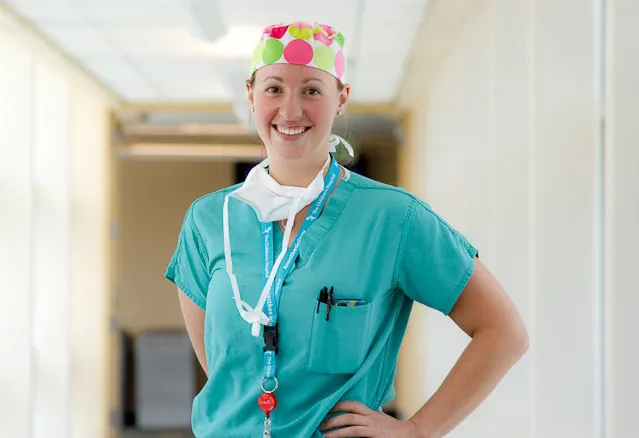
“And she was the most stylish Grammy on the block, with the perfect hand bag and the best shoes,” says Sarah Milliken Glabe, MD. “She had a way of always making you feel special, whether you were in her presence or miles away.”

In honor of her Grammy, Sarah gives $175 every year to the Medical Alumni Association Stethoscope Fund at CU Anschutz Medical Campus.  

Every $175 buys a stethoscope for a first-year medical student at CU. Since the late 1990s, thousands of CU medical students have received stethoscopes at an annual ceremony to welcome them to School of Medicine and to the beginning of their medical careers.

“I felt impacted by the gift of a stethoscope when I was a medical student, and I hope that same impact is felt by students who come after me.” Sarah said. “It’s a reminder of the physicians we all have come to medical school to be and hopefully be in our careers after we leave.”  

When Sarah was a first-year student in 2004, the medical school was still at Ninth and Colorado in Denver. Each student invited only two guests because the auditorium was small, and the happy crowd was standing room only. One by one, Dean Richard Krugman, MD, called the students to the stage. A professor gave Sarah a white physician coat and put a stethoscope around her neck.

“It was the first real feeling that I was a doctor,” Sarah said. “To this day the stethoscope serves as a reminder of why I got into medicine in the first place—that compassion and empathy with each patient is needed.”

Especially when the patient is your Grammy.

When Nina Jean was dying of bladder cancer, the doctors who treated her were “the kind of physicians who take a little extra time even when their schedule probably says not to,” Sarah said. “That intimate connection between you and the patient is so important. They allow you to be a part of their care, especially in what can be a scary and vulnerable time in their life. I think about how difficult my grandmother’s life was at the end, and the kindness and patience of these doctors really meant something to her, to my mom and to me.”

Now Sarah is the one standing on the stage at the White Coat Ceremony handing out stethoscopes to students as part of the Medical Alumni Association.   

“I still have my stethoscope from CU. It was the stethoscope I first used, and I won’t ever get rid of it. Who knows? Maybe 50 years from now it will be found by one of my grandchildren and it will connect me to them.”

Campus
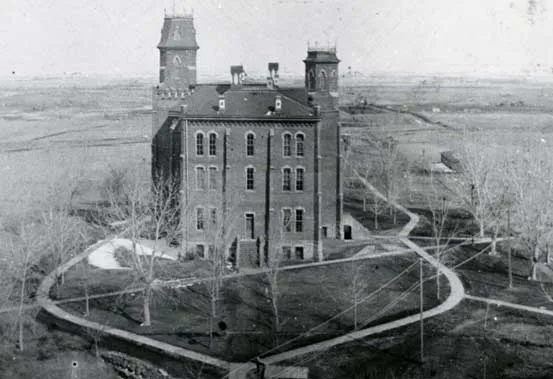
Old Main Building

Before there was CU, a courageous and tenacious few were so profoundly committed to the transformative power of an education.

The idea of a public university in the young Colorado territory was considered a valuable and worthwhile pursuit as early as 1861. But political disputes, economic distress and local jealousies stalled the idea from becoming a reality for years. Some folks clamored that Colorado didn’t have any use for an academic institution.

But some early settlers never gave up.

First, there was the gift of land. Three Boulder families—Marinus and Annie Smith, George and Mary Andrews, and Anthony and Mary Arnett—collectively donated 51 acres of land on the heights south of Boulder Creek, which was formally accepted in January 1872 by the legislature as the permanent location of the future university.

Funds were still needed for a university building. Bitter rivalries among Colorado’s lawmakers, who wanted their communities selected instead as the home for a public university, continued to embroil the idea for another two years. Then, in January 1874, the Colorado Territorial Legislature agreed to provide $15,000, a sizeable sum in those days, toward a university on the condition Boulder citizens contribute an equal amount.

David Nichols, the territory’s speaker of the house and a Boulder resident, realized he needed to immediately raise the necessary funds, lest his town lose the opportunity.

Legend has it, Nichols said: “If $15,000 is what they want, we’ll get it.”  

Like Paul Revere, he rode by horseback that cold and rainy January night for five hours the 30 miles between Denver to Boulder to knock on the doors of ordinary citizens to see if they could—if they would—donate the money.

The fate of CU hung in the balance.

By the time a weary Nichols was back at his legislative seat in Denver the next morning, Boulder residents—104 parties, to be exact—had pledged the funds needed to secure the University of Colorado, and the appropriation bill passed.

Collectively, the citizens of Boulder committed a total of $16,806.66—more than enough to give the fledgling university a permanent home. Pledges ranged from $15 to $1,000. More than half the donors contributed fewer than $100. Finally, after long years of struggle, the University of Colorado was more than an idea—it had sufficient funds to begin the construction of the first university building.

On Sept. 20, 1875, the cornerstone for Old Main was laid. By the following spring, CU officially opened its doors, five months before the Centennial State joined the union in 1876.

After 15 years of effort, and though these early philanthropic contributions placed a true hardship on Boulder’s frontier families, their commitment to education remains an enduring testament to what CU stands for to this day.

It is a legacy upon which we continue to build and honor.

chris and brad cillian
Content Section

In 2006, Christine Cillian’s life changed forever. She wouldn’t know how severely for another two years.

Christine, then 29, suffered a severe neurological attack that she had thought pointed to multiple sclerosis. Her arms fell limp. She couldn’t walk. Her body failed to function.    

“Everything turned upside down,” she says.

Doctors at the time said she didn’t have MS. But she learned in January 2008 they were wrong: An MRI revealed brain lesions and definitively diagnosed Christine with the disease.

Over several months, she grappled with anxiety, fatigue and depression—the “silent symptoms,” her husband, Brad, calls them.

They immediately turned to the Rocky Mountain Multiple Sclerosis Center at University of Colorado, where national-caliber research and treatment is paired with compassionate support and education. There, they started an “MS 101” class, sought a second opinion and soon began aggressive care.

Dr. Timothy Vollmer, a center co-director, told Christine that without intensive treatment, she faced severe disability. So Christine participated in clinical trials and took a drug developed for cancer but effective in treating MS. And she confronted her disease comprehensively with exercise, counseling, education and medicine.

“That’s how I want to treat my disease—aggressively,” Christine says.

Now life—upside down to this point—has began to right itself. The possibility of a brighter future seems within Christine’s reach.

As it’s done for many patients, the MS Center is slowing the disease and its effects with the patient-centered care it’s practiced for more than 30 years.

Brad says it’s revolutionizing future care within Colorado and across the nation.

“We’re lucky to have it in our backyard,” he says, adding that the center’s doctors hold weekend seminars around the country, so more than just Front Range patients benefit from the center’s expertise. “Everybody gets access to best-in-the-country care.”

That top-notch treatment happens, the Cillians note, partly because gifts support the center. Donor generosity enables staff to work toward earlier diagnoses, individualized care and research that identifies steps toward, perhaps, a cure.

MS changed everything for the Cillians. But the MS Center is changing everything again—her health, their marriage, their perspective—for the better.

In gratitude, the Cillians donate to the center, and Brad serves on its board.

“We’ve gotten so much out of the center that the bare minimum we can do is give back so that others can have that access,” he says.

That is access, Christine says, to more than innovative treatment; it’s a partnership with people who care deeply for their patients.

“It's not just a job for them,” she says. “These people are truly passionate about doing something about MS.”

Campus