If you were a student in the Denver Public Schools between 2008 and 2019, you may not have realized it at the time, but you were likely benefiting from the most comprehensive and effective education reform initiative in the history of the United States. You were learning more than students in other comparable Colorado school districts, and you were more likely to graduate within four years than students from previous years. This held true regardless of your ethnicity and if you were part of a historically underserved population. Moreover, the improved learning outcomes you experienced during that period are destined to have a lasting impact on your life and almost certainly on your children’s lives as well.
If you were parent (or grandparent) of a Denver Public Schools (DPS) student during that time, you may remember that the DPS reforms sparked heated debate. On the one hand, parents enjoyed more choice in where their children attended school, while on the other they may have seen established neighborhood schools closing, new charter schools opening, and more pronounced turnover among teachers, principals, and other school staff. It may have been natural to wonder what good could come from so much upheaval.

It turns out quite a lot, according to the results of a landmark study by the Center for Education Policy Analysis at CU Denver.


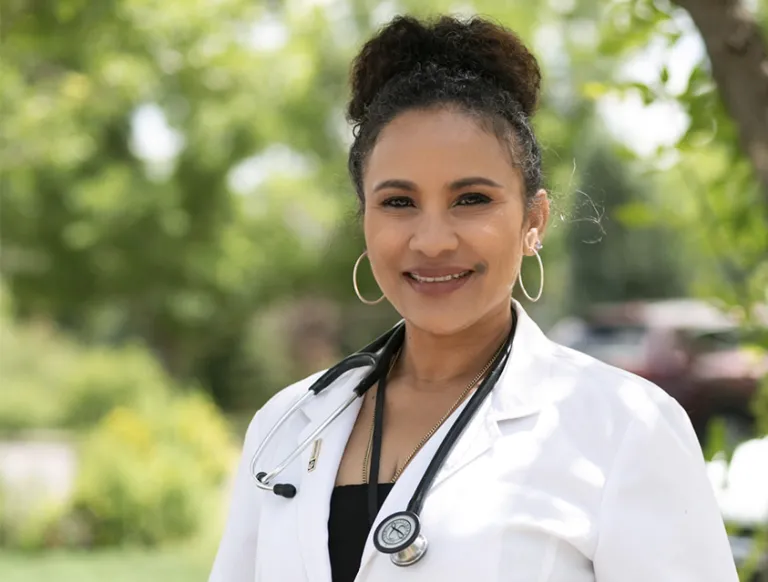
Over the years, many of the arguments for and against the DPS reforms have been subjective, relying on limited, anecdotal evidence. Crucially missing was a broader, more data-driven analysis of the reform’s actual impact, which is where the Center for Education Policy Analysis (CEPA) in the School of Public Affairs (SPA), comes into the picture. Led by Parker Baxter, JD, Scholar in Residence at SPA and CEPA’s director (pictured below), a team of researchers embarked on a robust statistical analysis to determine whether Denver’s school reform strategy improved academic outcomes for students.


Content Section

CU Giving Days break records with community support

This spring, three CU campuses rallied their communities to raise money for scholarships, programs, emergency funds and more. Matching and challenge gifts played a crucial role in amplifying contributions, encouraging participation and maximizing impact. Here’s what that collective effort made possible: 

 ____________________

Image
Buffs all in

On CU Boulder's third-annual giving day, 2,499 donors raised $1,082,362, almost doubling last year’s giving day total. These gifts will directly fund student success, research, athletics, emergency assistance and other critical needs.

Image
Carry the light logo

UCCS’ inaugural giving day inspired the Mountain Lion community to make an impact. 425 donors gave during the 24-hour event, raising more than $110,000 for scholarships, essential programs and student resources.

Image
Make it real logo

CU Denver’s annual giving day ensured continued success for students by raising $122,550 from 386 donors, surpassing the campaign’s goal. Gifts were directed to 32 funds across CU Denver’s schools, colleges and key programs.

food fight banner

Food Fight was a huge success! Here’s what you made possible.


In fall 2024, CU Denver and UCCS participated in Food Fight, a friendly fundraising competition to raise money for the food pantries on each campus. Your support during this inaugural Food Fight campaign made an incredible impact.

Nearly half of college students struggle with food insecurity which can impact their health, grades, relationships and more. Campus food pantries provide a crucial safety net—and they supply more than food. CU Denver and UCCS students can also grab essentials including toiletries and baby care items, get connected with mental health resources and housing services, and find a welcoming space where they are met with kindness and support. 

Thanks to you, we're knocking out hunger and helping students succeed at CU Denver and UCCS! 

Content Section

Your Impact

370 donors raised nearly $34,684

195 donors raised more than $17,594 for Milo's Market at CU Denver

175 donors raised more than $17,090 for Clyde's Cupboard at UCCS

Who participated in Food Fight 2024?

Counter: 27 %

First time donors

Counter: 25 %

Previous donors

Counter: 35 %

Alumni

Counter: 23 %

Faculty & staff

Content Section

Quick facts about Milo's Market, CU Denver's free grocery store


  • Pantry usage increased from 3,000 to 7,000 students per semester in fall 2024

  • Provides fresh produce, dry and canned goods, dairy products, easy meals, hygiene items and more

  • Recently expanded with refrigerators and more fresh produce

  • Participates in Swipe Out Hunger, a program that allows students to donate meal swipes to those needing food assistance


    “With the massive increase in food pantry usage this semester, we were entering a very challenging budget situation. Before this campaign, we were unsure what we would be able to offer for the spring 2025 semester due to our dwindling funds. These funds are absolutely crucial to keeping our market open and will allow us to continue to serve students in a nourishing capacity next semester.” 

    —Victoria Watson, M.Ed, Assistant Director of Health Promotions & Basic Needs, CU Denver

Content Section
Content Section

Quick facts about Clyde’s Cupboard, UCCS’s campus food pantry


  • Students can visit the pantry once a week for 8–10 nonperishable food items and five hygiene items

  • Fresh Food Fridays provide fresh produce, dairy products and more

  • Through the Mountain Lion Meals program, students can sign up for three free meals a week at on-campus dining halls


    “Donors have made a real difference for us. The total dollars raised could fund almost an entire semester of weekly restocks for Clyde’s Cupboard. If we were to dedicate the money raised from the campaign to our Fresh Food Friday Program, it could fund two full academic years of Fresh Food Fridays!” 

    —Amber Gilson, Basic Needs Coordinator, UCCS

food fight word mark

Dreaming of America in Liberia

Salwa Bamba provides a first-person account of how the generosity of others propelled her success.

My name is Salwa Rita Mourtada Bamba. I am originally from Liberia in West Africa, and I came to the United States seeking asylum when I was 20 years old.

Before the civil war, life in Liberia was everything a kid would hope for. I had two brothers and my older sister. We grew up together on a huge property where my father had a couple of stores and a restaurant. There were gazebos and tables all over the compound, a basketball court, volleyball court, and a playground with swings, merry-go-round, seesaw, monkey bars. It was a kid’s dream.

But when the war started in 1989, everything changed.

I was 12 when the country started to get tense. We could tell something was wrong, and we would see footage on TV of the massacres. We watched the rebels advance toward the capital and as they approached our area, we saw the fires, the looting, the rape. My father was captured and we didn’t see him for a long time. It was just me, my siblings and my mom in a camp. Everything was destroyed. We were sleeping on the floor. We had nothing.

Salwa Bamba with siblings in Liberia

We were reunited with my father in 1991, but not long after that, my sister Laila Annette was captured and murdered. Believe it or not, our family never sat down to talk about her death. I don’t think any of us have the courage to reminisce about her life because we’re afraid to break down. She had so many dreams. She would say, “I want to be an artist. I want to be a surgeon. I want to be a firefighter.”

After Laila’s death, my parents sent me to Ghana to stay with an acquaintance from church, who provided a place to live, but no other support. It was so difficult not having parents with me as a 14-year-old. When I got sick with typhoid fever, I had no one to take care of me. I would go to the hospital and there was no one to pay the bill.

Salwa Bamba as a teenager, she is smiling and wearing a white dress with pink, green and yellow geometric designs.

After I graduated from high school in Ghana, I started to dream about studying medicine in the United States. I had become interested in medicine during a period of relative peace in Liberia, when I helped United Nations doctors care for the sick and injured as a 13-year-old triage nurse. It brought me so much fulfillment to watch people get better. And I had always dreamed about America. In Liberia, all of our school books were from America, so I knew about Pecos Bill and tornados. At my dad’s restaurant, I would change my accent to speak like an American.

My dad had connections, so when I told him about my dream of studying in the United States, he talked to the American ambassador for me. Eventually, when I was 20, I came to New York City by myself. Reality hit me when I arrived at my aunt’s place in Queens and I saw that she had six children in a two-bedroom apartment. I started missing my nice beach back home.

After a year in New York City, I moved to Colorado, where my uncle lived, and I started pursuing a bachelor’s degree in nursing at CU Denver. Because of my temporary protected status, I was never eligible for federal or state aid, which meant I had to work for one semester to save up money, go to class for a semester, and then stop to save up money again. To add to the challenge, my temporary protected status would expire every 18 months, along with my driver’s license and my ability to work. That’s when I really had to hustle.

Later, when I had children, we relied on food stamps and food pantries. At one point, I was homeless and slept in my car with my son. Before one particular semester, I begged the bursar to let me register even though I didn’t have the money to cover the fees. He suggested I apply for scholarships. I said, “I don’t have a green card. I’m not eligible.” He replied, “You might find one or two that don’t have those requirements.” So, I looked and finally found one for $2,500. I applied, and lo and behold, I got it. From then on, I would always enter to win some award, and I would receive $1,500 here and there.

I also got help from people who knew what I was made of. My pastor loaned me $3,000 to pay for my first semester at CU. My brother loaned me a few hundred dollars here and there. When my dad was alive, he would send me money. And a few years ago, my mom loaned me $5,000 to pay for a semester of my master’s program. People have stood by me and pushed me. I stand on their shoulders today and I am proud.

Salwa with work colleagues at her clinic

My life changed when I graduated with my bachelor’s degree and got my nursing license. I moved out of my little condo where the landlord was after me every week and rented a beautiful apartment. Fifteen years after I arrived in America, I finally found my feet.

While I was working on my bachelor’s degree, I was always driving up and down Colfax Avenue. I watched the Fitzsimons campus being transformed into the Anschutz Medical Campus and I said to myself, “I will graduate from here one day.”

True to my word, I did graduate from the University of Colorado College of Nursing in 2020, and I currently work there as an assistant professor and at the CU Family Health Clinic as a nurse practitioner. I love my job. When I learn that a patient has done something I told them to do, I yell, “Oh my god!” and everyone comes running, thinking something’s wrong. But I’m just celebrating that my patient is doing OK. The saying is true: Do what you love and you’ll never work a day in your life.

The benevolence of others has been crucial to the story of my success. I cannot overemphasize how their willingness to help and be of service has impacted my life and my children. My daughter and son are both scholarship recipients at CU Boulder, and my son is about to complete his engineering degree with scholarship support from the Engineering GoldShirt Program.

Sometimes I wish my journey would not have been so rough. But despite everything, I am blessed. Everything that happened along the way has prepared me for what I will be called to do tomorrow.

Salwa Bamba with family. They are wearing white shirts and blue jeans.

With scholarship support, Salwa Bamba graduated with three degrees from CU: a bachelor’s degree in nursing in 2011, a master’s degree in nursing in May 2020, and doctor of nursing practice degree in 2021. She joined the first nurse practitioner fellowship in geriatric medicine at the UCHealth Senior’s Clinic, and she serves as a board member of the CU College of Nursing Alumni Association and the Community College of Denver Business Administration Advisory Board.

Bamba is currently a clinical faculty member at the CU College of Nursing’s Belleview Point Clinic, a facility for patients from marginalized backgrounds. She also mentors high school students through Denver Public Schools and has worked with the Cherry Creek School District to host immunization drives for low-income students and families. As a student at the CU College of Nursing, Bamba and a group of classmates started Future Voices, an organization striving to amplify the voices of underrepresented nursing students. The group currently runs a mentorship program with Hinckley High School, hosts donation drives for books and scrubs, and fundraises to help nursing students pay for school. Bamba also runs the Laila A. Mourtada Foundation; named after Bamba’s sister, the foundation focuses on education and health literacy for women and girls in Liberia.

Imagine the profound impact scholarships have on students

In 2023, your gifts funded $52 million in scholarships and fellowships, including the prestigious Chancellor's Award at CU Boulder. 

Hear three award recipients share their aspirations, academic pursuits and long-term goals.


“My big dream was to make some sort of contribution to the MS community… just to make even one person’s life with MS a little bit better. And I feel like I’ve actually been able to accomplish that… so now I need to dream a little bit bigger.”

Brodie Woodall, CU Boulder ’23