Content Section

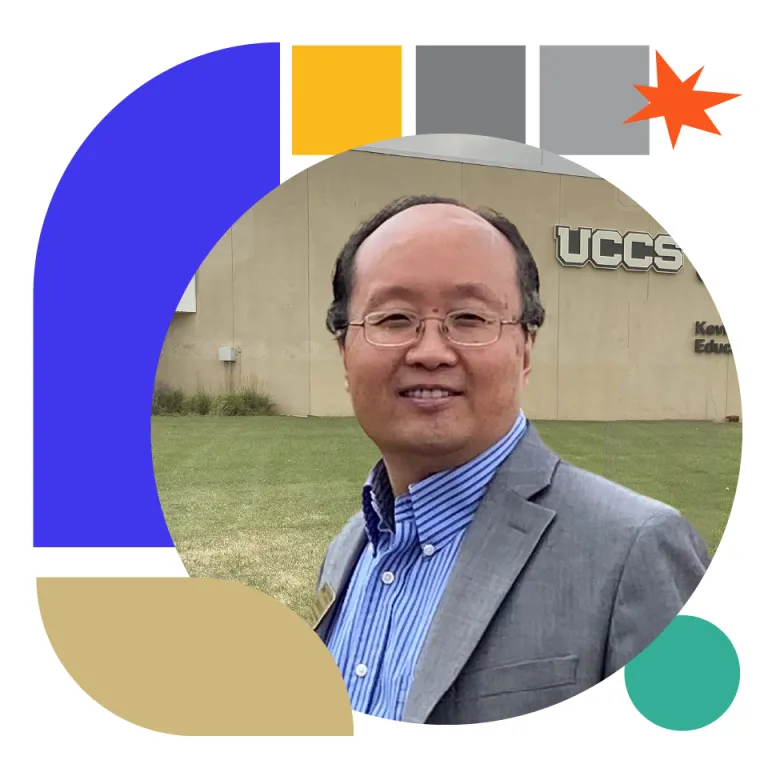
Shouhuai Xu, the Gallogly Endowed Engineering Chair in Cybersecurity and Professor in computer science, and Guenevere Chen, an associate professor in the UTSA Department of Electrical and Computer Engineering, recently published a paper on USENIX Security 2023 that demonstrates a novel inaudible voice trojan attack to exploit vulnerabilities of smart device microphones and voice assistants — like Siri, Google Assistant, Alexa or Amazon’s Echo and Microsoft Cortana — and provide defense mechanisms for users.

The researchers developed Near-Ultrasound Inaudible Trojan, or NUIT (French for “nighttime”) to study how hackers exploit speakers and attack voice assistants remotely and silently through the internet.

Chen, her doctoral student Qi Xia, and Xu used NUIT to attack different types of smart devices from smart phones to smart home devices. The results of their demonstrations show that NUIT is effective in maliciously controlling the voice interfaces of popular tech products and that those tech products, despite being on the market, have vulnerabilities.

“The technically interesting thing about this project is that the defense solution is simple; however, in order to get the solution, we must discover what the attack is first,” said Xu.

The most popular approach that hackers use to access devices is social engineering, Chen explained. Attackers lure individuals to install malicious apps, visit malicious websites or listen to malicious audio.

For example, an individual’s smart device becomes vulnerable once they watch a malicious YouTube video embedded with NUIT audio or video attacks, either on a laptop or mobile device. Signals can discreetly attack the microphone on the same device or infiltrate the microphone via speakers from other devices such as laptops, vehicle audio systems, and smart home devices.

“If you play YouTube on your smart TV, that smart TV has a speaker, right? The sound of NUIT malicious commands will become inaudible, and it can attack your cell phone too and communicate with your Google Assistant or Alexa devices. It can even happen in Zooms during meetings. If someone unmutes themselves, they can embed the attack signal to hack your phone that’s placed next to your computer during the meeting,” Chen explained.

Once they have unauthorized access to a device, hackers can send inaudible action commands to reduce a device’s volume and prevent a voice assistant’s response from being heard by the user before proceeding with further attacks. The speaker must be above a certain noise level to successfully allow an attack, Chen noted, while to wage a successful attack against voice assistant devices, the length of malicious commands must be below 77 milliseconds (or 0.77 seconds).

“This is not only a software issue or malware. It’s a hardware attack that uses the internet. The vulnerability is the nonlinearity of the microphone design, which the manufacturer would need to address,” Chen said. “Out of the 17 smart devices we tested, Apple Siri devices need to steal the user’s voice while other voice assistant devices can get activated by using any voice or a robot voice.”

NUIT can silence Siri’s response to achieve an unnoticeable attack as the iPhone’s volume of the response and the volume of the media are separately controlled. With these vulnerabilities identified, Chen and team are offering potential lines of defense for consumers. Awareness is the best defense, the UTSA researcher says. Chen recommends users authenticate their voice assistants and exercise caution when they are clicking links and grant microphone permissions.

She also advises the use of earphones in lieu of speakers.

“If you don’t use the speaker to broadcast sound, you’re less likely to get attacked by NUIT. Using earphones sets a limitation where the sound from earphones is too low to transmit to the microphone. If the microphone cannot receive the inaudible malicious command, the underlying voice assistant can’t be maliciously activated by NUIT,” Chen explained.

Research toward the development of NUIT was partially funded by a grant from the Department of Energy National Nuclear Security Administration’s (NNSA) Minority Serving Institutions Partnership Program (MSIPP). The $5 million grant supports research by the Consortium On National Critical Infrastructure Security (CONCISE) and allows the creation of certification related to leveraging Artificial Intelligence (AI) and block-chain technology to enhance critical infrastructure cybersecurity posture.

UCCS has a uniquely integrated campus cybersecurity model and is considered the center of cybersecurity education for the University of Colorado system. The university is primed to meet the cybersecurity needs of our nation, from education and research partnerships to developing the cybersecurity workforce of the future.

UTSA is a nationally recognized leader in cybersecurity. It is one of few colleges or universities in the nation – and the only Hispanic Serving Institution – to have three National Centers of Academic Excellence designations from the U.S. Department of Homeland Security and National Security Agency.

Why not build a research facility in Denver and ship it to Antarctica?

Why not build a research facility in Denver and ship it to Antarctica?

CU Denver's Colorado Building Workshop is educating future architects while taking on its most ambitious project yet.

Why not build a research facility in Denver and ship it to Antarctica?

Why not build a research facility in Denver and ship it to Antarctica?

CU Denver's Colorado Building Workshop is educating future architects while taking on its most ambitious project yet.

Content Section

Tucked into the east side of Livingston Island off the Antarctica Peninsula is the Cape Shirreff field camp. Here, National Oceanic and Atmospheric Administration (NOAA) scientists gather data on krill populations as part of global conservation efforts.

For three to six months each year, the NOAA scientists work in a monochromatic landscape of black volcanic rock, snow and ice, beneath a sun that never sets and in temperatures as low as -5°F. After finishing this physically taxing work each day, they return to their dilapidated living quarters where they often repair the facilities, remove mold and mildew and mop up standing water.

Thanks to students at the University of Colorado Denver, these rundown facilities will soon be a thing of the past.

Students come into our program wanting to learn about sustainability, so why not send them out to be part of the change they want to make in the world?
– Rick Sommerfeld, Assistant Professor

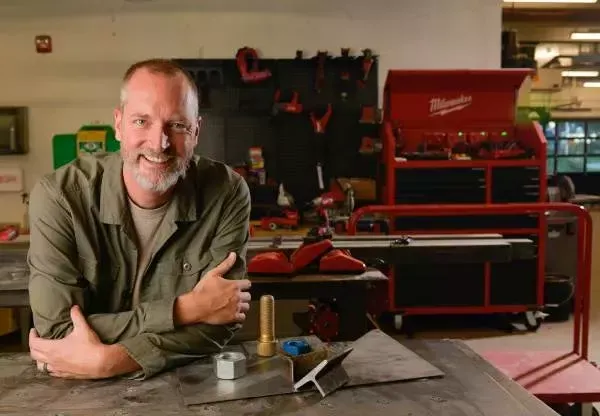
In spring 2022, 28 architecture students built a new dormitory, kitchen and living room for the scientists. In August, the buildings, which feature privacy, natural lighting and low-maintenance metal cladding, were taken apart, packed into shipping containers and sent on a 7,000-mile trip to Antarctica.


Sommerfeld and students discuss building models. From left to right: Antonio Valencia, Paola Larios, Caitlin Kennedy and Rick Sommerfeld

Sommerfeld and students discuss building models. 
From left to right: Antonio Valencia, Paola Larios, Caitlin Kennedy and Rick Sommerfe


The students who worked on this project are enrolled in the Colorado Building Workshop (CBW), a design-build certificate program run by CU Denver’s Department of Architecture that combines classroom learning with real-world experience.
 

Building on the Vision of One Donor

Rick Sommerfeld, assistant professor and the workshop’s director, says that philanthropy has been crucial to CBW’s growth over the years.  

"It took one person to see our vision and to understand that the work we were doing was important,” Sommerfeld says. “Don Johnson was the first donor to believe enough to invest in the people and the infrastructure.”

Johnson is the managing trustee of the Dr. C.W. Bixler Family Foundation. Through his initiative, the foundation’s support enabled the program to hire a teaching fellow, Will Koning, who is also a workshop graduate.  

“My time as a student in CBW was the formative experience of my architectural education, which continues to this day as the Bixler Fellow,” Koning says. “We have been able to work on important projects in incredible places.”

According to Sommerfeld, the program was able to take on more complex projects after Koning joined.

“Having Will around has been a huge impact to the program,” Sommerfeld explains. “We nearly doubled the number of students we could take on, and we went from working on tiny pavilions to community centers and now the Cape Shirreff project.”

The foundation’s funding also supports scholarships, safety equipment and tools. 


Workshop students Jasmine Jones and Caitlin Kennedy work on a drill press donated by the Dr. C.W. Bixler Family Foundation.

Workshop students Jasmine Jones and Caitlin Kennedy 
work on a drill press donated by the Dr. C.W. Bixler Family Foundation.


The students work with architecture firms, contractors and suppliers to complete projects that benefit the arts, education or the environment. After the program’s initial successes, architects began to donate time to critique student work while manufacturers provided free or reduced-cost building materials such as triple-pane windows.

“I think people are supportive because they see that we’re giving back and reinvesting in the community,” Sommerfeld says. “We’re able to take a client who has maybe $35,000 dollars for a community stage and deliver a $250,000 project. And we're trying to educate architects and make a better kind of architecture.”

The CBW ensures every donated dollar, pro bono hour and piece of equipment has a maximum impact on student education and the communities where they work.

Sommerfeld says graduates of the design-build program are in high demand from industry partners and architecture firms.  

“They call us and ask for our best graduates because they know they’re going to get that added set of skills with our students who have already seen a project through construction and dealt with budgets, developers and the bottom line,” he says.


Sustainability and Environmental Impacts  

In December 2022, Sommerfeld and seven CBW alumni will undertake the two-week journey to the Antarctic Peninsula. When they arrive at the Cape Shirreff field camp, they will camp out in tents for two months as they race against the Antarctic winter to reassemble the flat-packed living quarters.

Sommerfeld says the CBW students and alumni are personally invested in the project because they understand how the NOAA scientists’ research into krill populations impacts marine life. Krill serves as the main food source for fur seals, penguins, whales and other animals, making it a key part of the marine life food chain. Overharvesting krill by commercial fisheries can upset this delicate balance.

The NOAA scientists provide their data to the Convention for the Conservation of Antarctic Marine Living Resources, which works with its 26 member states to set krill harvesting quotas to protect marine ecosystems.


Phase one of the Cape Shirreff field camp project exhibited on the CU Denver campus before it was shipped to Antarctica. Photo by Rob Cleary

In June 2022, phase one of the Cape Shirreff field camp project was exhibited on the CU Denver campus before it was shipped to Antarctica. Photo by Rob Cleary.


With this in mind, sustainability and environmental impact were also top priorities for the students. Their design substitutes photovoltaic panels for fossil fuel, utilizes 90% recycled stainless steel and features energy saving triple-pane windows. The students also had to consider how to design a building to withstand the Antarctic climate, working closely with a contractor who specializes in Antarctic construction.

According to Sommerfeld, the Cape Shirreff project was an ideal way for students to apply their classroom learning to a real-world environment, albeit one 7,000 miles away.

“Antarctica is a very hard place to be working in right now because large parts of the ice shelf are crumbling into the sea as we speak,” Sommerfeld says. “But I think it’s important that we as architects find ways to do things more sustainably. These students come into our program wanting to learn about sustainability, so why not send them out to be part of the change they want to make in the world?”

Campus
Why not forge a new path?

Why not forge a new path?

UCCS first-generation student and former track athlete Kayla Waterman-Vandiver has her sights set on a PhD and a career in academia.
Why not forge a new path?

Why not forge a new path?

UCCS first-generation student and former track athlete Kayla Waterman-Vandiver has her sights set on a PhD and a career in academia.
Content Section

Kayla Waterman-Vandiver remembers the day in college when her dream career changed.

Waterman-Vandiver had planned to be a medical doctor from a young age and, with this in mind, was studying biology at the University of Colorado Colorado Springs (UCCS).

However, she began to consider a research career after a class in skeletal muscle physiology where Prof. Robert Jacobs opened her eyes to new possibilities. Waterman-Vandiver says her “aha” moment came when she received particularly affirming feedback on an assignment.

“Professor Jacobs told me he could see me flourishing as a scientist,” Waterman-Vandiver says. “That really was a pivotal moment for me because he was telling me I was on the right path.”

Jacobs' confidence in Waterman-Vandiver's academic abilities factored heavily in her decision to pursue postgraduate study in the biosciences rather than applying for medical school. Her new dream is to obtain a PhD and research type 2 diabetes, women’s health or sports medicine with a focus on female athletes.

People ask me why I want to stay in school, but I say, ‘Why not stay in school?’ Why not enjoy yourself along the way and learn as much as you can so you can make a bigger impact when you graduate?
– Kayla Waterman-Vandiver

“I know that six additional years seems like a really long time and people ask me why I want to stay in school,” she says. “But I say, ‘Why not stay in school?’ Why not enjoy yourself along the way and learn as much as you can so you can make a bigger impact when you graduate?”


Helping Students Reach Their Full Potential

Scholarships have made it possible for Waterman-Vandiver to stay in school and reach her goal of earning an advanced degree, a path no one else in her family has taken.

“I push myself because my mom in particular always felt like she had the potential to do more,” says Waterman-Vandiver, the youngest of six siblings.

Kayla Waterman-Vandiver with her parents Jason and Katrina at her high school graduation. 
As an undergraduate, she qualified for the Bruce and Anne Shepard Reach Your Peak Scholarship which covered most of her tuition costs.

“The scholarship was really helpful during my undergraduate years,” Waterman-Vandiver says. “It was my largest scholarship and it let me walk away with much less college debt.”

Other scholarships, such as the UCCS Chancellor’s Award and the UCCS Graduate Research Fellowship, also helped cover the cost of her undergraduate and graduate education.


Finding Motivation Through Athletics

Waterman-Vandiver flourished at UCCS both as a student and a track-and-field athlete. In 2019, 2020 and 2021, the team won the Rocky Mountain Athletic Conference Championships. Because of her outstanding performance, after her first year, Waterman-Vandiver was awarded an athletic scholarship.

“I really love track because it shows you a different side of discipline and determination than schooling and academics,” Waterman-Vandiver says.

kate


Kayla Waterman-Vandiver on the track at the Mountain Lion Fieldhouse.


Waterman-Vandiver and her teammates found their home at the Mountain Lion Fieldhouse. Made possible in part by donor support, the facility became a home base for the UCCS track-and-field team.

“It was awesome to be able to be done with our running workouts and go straight to the weight room,” Waterman-Vandiver recalls. “Having that one facility for all of us made us feel like more of a team.”


Exploring a Passion for Research

Being part of an athletics team also piqued Waterman-Vandiver’s interest in women’s health, which is now a focus of her research.

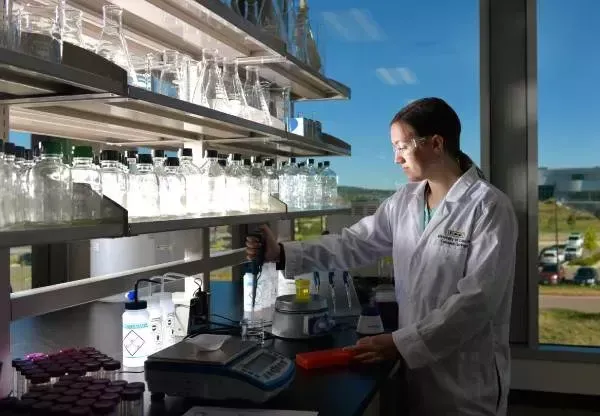
After graduating magna cum laude with her bachelor’s degree, Waterman-Vandiver hit the ground running as a graduate student. With Jacobs as her thesis advisor, she is working on two research projects, one which focuses on mitochondrial function in aging and type 2 diabetes and the other relates to treating hot flashes in menopausal women.

kate doing research

“I realized last year that there are very few women studied in scientific research,” she says. “So, I want to contribute to our understanding of women’s health by doing more research with female participants.”

Jacobs attributes Waterman-Vandiver’s growth and success at UCCS to her work ethic.  

“Her tremendous academic efforts at UCCS have allowed her the opportunity to pursue a doctoral degree in one of the nation’s preeminent laboratories studying human bioenergetics,” Jacobs says. “I am sincerely excited to see what Kayla’s future brings.”

Why not do what’s right by veterans?

A CU Boulder bridge program is helping veterans transition to university life.

Why not do what’s right by veterans?

A CU Boulder bridge program is helping veterans transition to university life.

Content Section

When Joey Morgan stepped foot on the CU Boulder campus in summer 2019, he felt like a 44-year-old stuck in a 24-year-old’s body.

Just one year before, Morgan had completed a tour of duty in Syria, fighting alongside the U.S. Army’s Kurdish allies and witnessing the lead-up to the withdrawal of U.S. troops from the Middle East.

“War was like a fever dream,” Morgan says.


Welcoming Veterans to Campus

Kristina Spaeth, an academic advisor at CU Boulder’s Veteran and Military Affairs (VMA) office, says it is common for veterans like Morgan to feel out of place when they return to school. Spaeth has spent the last decade working with veterans who fought in the Global War on Terror including the conflicts in Iraq and Afghanistan. The veterans enrolled in college utilizing the Post 9/11 GI Bill.

These are people who have sacrificed so much of themselves for the rest of us. The very least that we can do is to treat them right and do the right thing for them. Why not do the right thing?
– Kristina Spaeth, Academic Advisor

Her work serves the VMA’s overarching mission, which is to support student veterans and their dependents and provide them with information and assistance with their GI Bill benefits. Through her work at the VMA, Spaeth realized that veterans needed a bridge program to help them acclimate to academic and social life on campus before starting classes.

Kristina Spaeth, VMA academic advisor, discusses course selection with Connor Greenberg, a bridge program participant and CU Boulder student

Kristina Spaeth, VMA academic advisor, discusses course selection with Connor Greenberg, a bridge program participant and CU Boulder student.


“These are people who have sacrificed so much of themselves for the rest of us,” Spaeth says. “The very least that we can do is to treat them right and do the right thing for them. At the time, creating the bridge program from nothing felt like the biggest challenge I’d ever encountered in my career, but it was like, ‘Why not do the right thing?’”

Working with Stewart Elliott, director of the VMA, Spaeth garnered the university’s support and launched the two-week summer bridge program in summer 2017 with 18 students.

Since then, the program has added a winter session and more than doubled in size, with 40 students in its 2021 summer cohort. The program provides intensive classes that enhance math, writing and research skills while also offering the opportunity for incoming veterans to network and form friendships.

Five years in, the bridge program is showing encouraging outcomes. Students who complete the program have a higher GPA and retention rate than those who do not.


Funding for Success

Private donor funding has helped the VMA grow over the years. Today, the office offers a range of services and support, including scholarships and student aid, career support, academic advising, tutoring, events and programming, a student ambassador program and more.


Student veterans study in the VMA student lounge

Student veterans study in the VMA student lounge.


“We are extremely fortunate to have significant financial support from foundations and private donors,” Elliott says. “This support has clearly transformed the CU Boulder VMA into a world class program supporting student veterans and veteran dependents who attend CU Boulder.”

As philanthropic support for the VMA has grown, so has support for the bridge program.

Spaeth says the program initially ran on a small budget from the university, but over time its success began to attract funding from private donors and organizations such as The Anschutz Foundation.  

“I think our donors saw that we were doing the right thing for veterans,” Spaeth says.  

Today, the bridge program is entirely donor funded. Philanthropic support enables the program to provide a $1,000 stipend to every student who completes the two-week program, up to 80 students each semester. In addition, donor support allows the program to compensate faculty and instructors who teach, speak on panels and connect with students.


Finding Purpose

Through the bridge program and other VMA programs, Morgan made friends and connected with civilians and veterans.

“At first, I didn’t know if I could effectively get along with civilians,” says Morgan, who is majoring in psychology. “But over time, I realized that there are people who want to know what we’ve been through in the service and that friends can be from anywhere, from different walks of life and any age from 25 to 75.”

That sense of belonging gave Morgan the confidence to forge ahead on an idea he had while visiting the grave of a friend’s father at Fort Logan National Cemetery in 2021.

“It was around the time that we were hearing about how the Taliban had taken over Afghanistan,” Morgan says. “While I was at the cemetery, the thought struck that we need a place that people will gravitate to, where they can reflect on what happened in the two decades, where veterans and civilians alike can mourn and remember the sacrifices of the survivors and the fallen – a place where we can meet in the middle, on common ground.”

After Morgan spoke to faculty involved with the bridge program about his idea, they connected him to the Global War on Terror Memorial Foundation and their plans for a war memorial on the National Mall in Washington D.C.


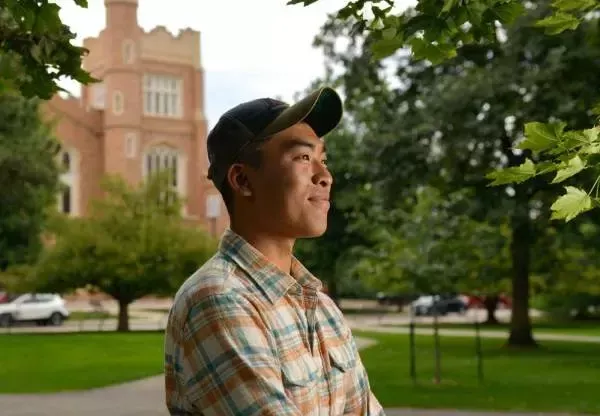
Joey Morgan at Old Main on the CU Boulder campus

Joey Morgan at Old Main on the CU Boulder campus


Morgan is now serving as a veteran advisor for the memorial. He hopes to contribute to the memorial’s design, which currently includes bas-relief sculptures, photo galleries, plaques with the names of those who died in the war and a garden with flowers and plants from the Middle East such as tulips, jasmine and irises.  

“The hope is that when someone visits who has been in these wars, they’ll feel a sense of recognition when they see the flowers,” Morgan says.

Spaeth says it keeps her motivated to see veterans like Morgan find a sense of purpose and place on campus.  

“Some find lifelong friendships. They do club sports together and spend holidays together,” she says. “That’s why it’s so personally rewarding to do this work.”

Campus