Why not be fearless when fighting a global pandemic?

Why not be fearless when fighting a global pandemic?

CU Anschutz's Dr. Michelle Barron battles the COVID-19 pandemic on the front lines and keeps smiling despite the challenges.
Why not be fearless when fighting a global pandemic?

Why not be fearless when fighting a global pandemic?

CU Anschutz's Dr. Michelle Barron battles the COVID-19 pandemic on the front lines and keeps smiling despite the challenges.
Content Section

Dr. Michelle Barron has had a tough three years. When the COVID-19 pandemic was declared a national emergency in the U.S. in March 2020, her job put her on the front lines.  

But Barron, the senior medical director of infection prevention and control for UCHealth University of Colorado Hospital, and her team were up for the challenge, drawing on years of experience researching infectious diseases to improve public health outcomes.
Our team approaches every day asking ourselves, ‘Why not aim for zero preventable infections?’ Then we build systems and operations to make that a reality.
-- Dr. Michelle Barron

“Fear of the unknown doesn’t scare me at all because this is what I do. I’m an infectious disease doctor and I do detective work,” Barron says. “I often start with unknowns and that's what drives me to try and figure out what is wrong.”


Responding to the Unknown Without Fear

As an expert on infectious diseases, Barron’s job involves planning for pandemics before they happen.

“People don’t think about this, but pandemics occur about every 10 years. They’re not all of the same magnitude, but if you’re in my world, you prepare,” Barron says. “You think through what resources you need for patients and for staff.”

So, when COVID-19 hit in March 2020, Barron and her staff were able to take a systematic approach to understanding the pandemic even though there were so many unknowns.

“We were dealing with a new disease. In addition to a lack of information, there was also an unbelievable amount of erroneous information. The evidence wasn’t as firm as we were used to, everything was changing quickly,” she says. “It was like working in a hurricane.”


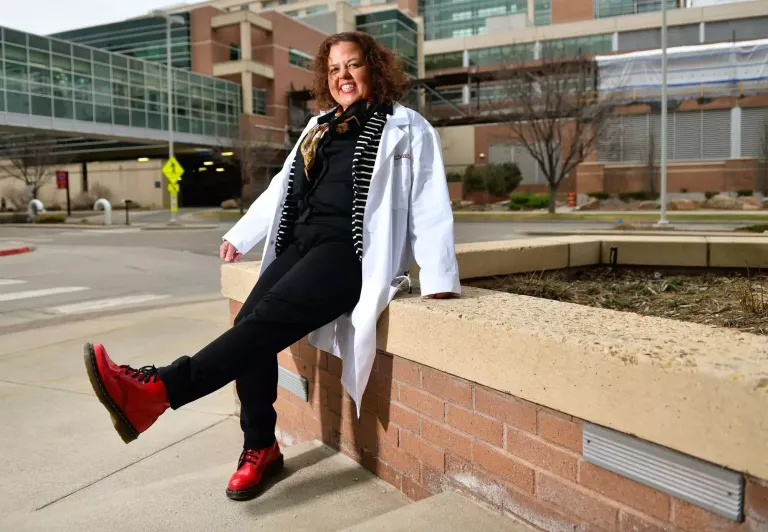
Dr. Michelle Barron at UCHealth University of Colorado Hospita

Dr. Michelle Barron at UCHealth University of Colorado Hospital.


To develop an effective pandemic response, Barron and her team drew on existing models from the 1918 flu pandemic and other pandemics to predict disease spread, to plan for staffing shortages and hospital triage measures and to determine how to prevent transmission.

“While I can appreciate that some things are not preventable, our team approaches every day asking ourselves, ‘Why not aim for zero preventable infections?’” Barron says. “Then we build systems and operations to make that a reality.”

With these models, they were able to plan for hospital staff and their family members getting sick which enabled them to backfill positions and plan for staff to miss work due to their children’s school closures.


Inspiring Patients and Donors

Barron's can-do attitude has drawn attention from donors over the years.  

After a rare bacterial infection landed George Sissel in the hospital in 2019, he and his wife Mary Sissel were so impressed by Barron’s approach to diagnosis that they decided to support her research.  

Barron says their generous offer came at a particularly crucial time for her.

“I had been wanting to look at how many people get fungal infections,” she recalls. “It’s an important area of study but it’s not something you get federal grants for. When I met the Sissels, I had just been getting to the point where I was about to say I’m not doing research anymore.”

With help from the Sissel family, Barron’s research got back on track. Barron has since partnered with her colleague, Dr. Esther Benamu, to complete a study on fungal infections in patients with underlying blood cancers or transplants. Barron is also investigating the links between COVID-19 and fungal infections.


Working with Communities

In addition to providing patient care, conducting research and steering the hospital through its pandemic response, Barron also partners with churches, community centers and other local organizations on community outreach. Barron’s team leverages the organizations’ community connections to reach the largest number of people.

“Often, the natural cultural navigators will be community members with a bit of health care training that people seek out when they need something,” she says. “Once you find them, you sit down with them and get them on board. That’s how you reach the rest of the community.”  

Barron also made it a priority to support public COVID-19 vaccination drives throughout Colorado. At one vaccine drive held next to a Broncos training camp, Barron spoke with local news reporters who were on site to cover the training camp.

“People actually showed up and said, ‘We saw you on the news just now and thought, well, why not?’” Barron recalls. “That was one of my heart-melting moments where I was so happy I do this work. If I can convince one person to get a vaccine, I’ve made a difference in the world and that matters to me.”


Barron (in background) oversees vaccination event for the Denver

Barron (in background) oversees vaccination event for the Denver

Although Barron says she was never afraid during the pandemic, her anxiety level would rise and fall based on what was happening. She struggled with “turning off” after long and stressful days, but personal support from friends like the Sissels sustained her through the toughest times. “Like many of my friends did throughout the pandemic, Mary and George would text me if they saw me on the news or on a campus presentation to wish me well,” Barron says. “Their philanthropy is an example of how they watched and cared for me, but they also did this in a very personal way.”

Campus
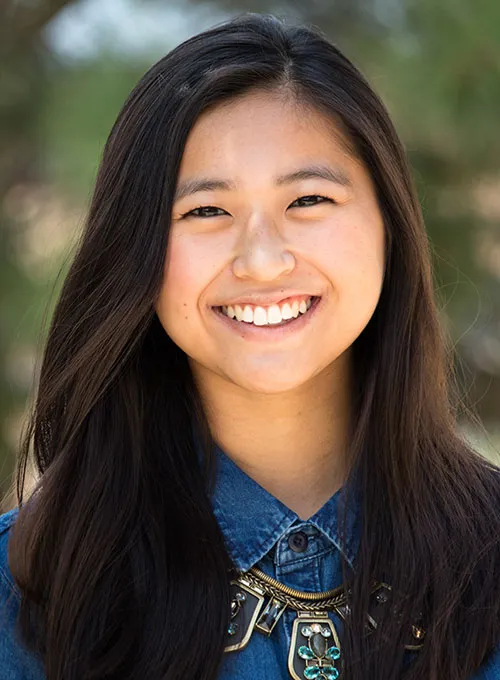
rohrbach


That’s what Mae Rohrbach learned in the UCCS dorms in the fall of 2013.

“We had to flush it multiple times until we got it fixed. I thought: There is so much water being wasted,” says Mae, now a senior studying geography and environmental studies.

Most students would fix it and forget it. But Mae and a couple classmates from her “Sustainable Me” environmental studies course knew this problem deserved a longer look.

“We thought about the toilets,” she recalls. A lot.

Specifically that about 200 of them used 3.5 gallons per flush. Efficient toilets use just 1.8 gallons, reducing costs and water usage. So Mae and her classmates worked with campus officials and sought funding to install more efficient toilets. By May, she and volunteers replaced the old commodes and smashed them into recycled materials for campus pavement.

“It’s come full circle,” Mae says of the Toilet Retrofit Project, which has saved UCCS about $15,000 in water costs.

She enrolled at UCCS partially because of its commitment to sustainability (the campus’ beauty didn’t hurt either: ”I love the views,” she says). During her campus tour, she happily spotted the university’s recycling and composting efforts, and she wanted to get involved. Mae spoke to campus sustainability leaders about volunteering and has spearheaded two major sustainability projects as a student at UCCS— the Toilet Retrofit Project and the installation of a dining hall vending machine called OZZI that lowers meal costs for students who choose reusable food containers. Mae wants to tackle one more project before graduating and heading to the Peace Corps: bringing non-potable recycled “grey” water to campus to save resources.

Mae knows this means major logistical hurdles, but she has put real-world skills—how to plan, coordinate with leaders and build a case for her ideas—into action. UCCS has taught her to view problems as opportunities to help: “This is something that could be changed for the better. What can I do about it?”

“Service is a core part of who I am,” she says. “My perspectives may change, but service will not. That will always be a part of me. You only have so much time on this planet, and what I want to do with that time is serve others.”

garrent Rose

What’s something about you that most people wouldn’t know if they were looking right at you?

Garrett Rose briefly considered the question and then wrote:

I get depressed a lot.

“I either didn’t know what to say or didn’t understand the question,” Garrett, now a senior at CU Boulder, recalls.

That was in early 2014 during an ice-breaker training session for the campus’ Gender and Sexuality Center. His peers didn’t think about it so deeply.

“Everyone else was like, ‘I have three dogs at home,’ ” he remembers.  

Garrett learned his answer wasn’t too personal.

“Somebody afterward said that my sadness was welcomed here,” he says. “It was one of the moments where I felt like I could be myself. I didn’t have to ignore what I was.”

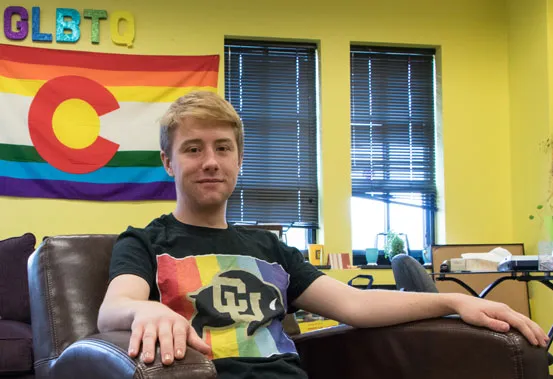
He took that lesson seriously, and soon discovered that talking about who he is would define his CU Boulder experience. He came out as gay while in college. He engaged the campus community--“getting involved gave me a bigger sense that being gay was OK.” And he started pouring much of his time into the Gender and Sexuality Center, where he volunteered as a freshman before joining its small seasonal staff.

The Center promotes equal opportunity and supportive environments for LGBTQIA students, faculty and staff.

But Garrett says its goal is often simpler: “Allow people to talk. And listen to them.”

The Center’s reach is significant. It welcomes more than 15 visitors each day during the school year, and impacts more than 3,000 students, faculty, staff, graduates and community members annually with its programs. It offered nearly 100 educational sessions in the 2015-16 school year, including safe-zone trainings and peer education about gender and sexuality issues. Staff and volunteers talk with students and others outside the Center if they’re not comfortable visiting. And online tools allows visitors to interact with staff anonymously.   

Garrett says it’s vital that the Center doesn’t just serve the LGBTQIA community; it will reach any person or group that wants to ally with the Center’s goals.

For its efforts, the Campus Pride organization ranks CU Boulder among the nation’s top universities for its dedication to LGBTQIA students.

That outreach and success gets people talking: about their identity, about their campus, about their community. That builds a more welcoming environment, Garrett says.

“It feels like a home,” he says. “It feels like a community.”

Campus
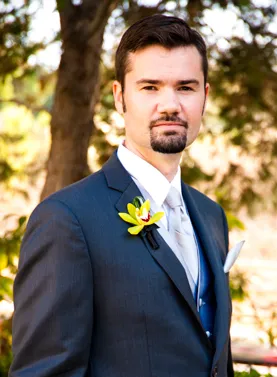
Sean Coetzee Portrait
Content Section

Sean Coetzee loved how media forensics—an emerging industry that uses technology to fight crime in the digital age—expanded the realm of what he did as a sound engineer. Yet in late 2013, one year away from completing his master’s at CU Denver in the Media Forensics program, Sean was diagnosed with colorectal cancer. He died only six weeks later at the age of 32.


“When I lost Sean I thought my life was over,” said his wife, Melissa Coetzee.

After months of sleeping, sobbing and binge-watching Netflix, Melissa started to think about Sean’s legacy. The idea of a scholarship in Sean’s name crossed her mind. She pulled herself off the couch, sat in front of her computer and decided to email CU Denver.

How do I create a scholarship? she wrote.

A scholarship in memory of her Sean, who never passed up the chance to browse the racks of a record store. Who played his guitar for hours. Who loved musicians like PJ Harvey, Nick Cave, Sigur Rós, Norah Jones, Queen, Frank Zappa, and the Beatles.

A life cut short, but a scholarship that will honor Sean foreverSean, a citizen of three different countries, master of two languages and relisher of a pint of Guinness.

Sean, the husband who captured her heart when they met in London—they bonded over a shared love of music and live events and never left each other's side for more than a few days since the moment they met.

Melissa realized that if she raised $25,000 a scholarship at CU Denver—a place she had never even visited—would last “in perpetuity.”

In other words, forever. Something tangible that would help generations of CU Denver students who want to make the world a safer, more just place. Just as Sean would have. Melissa had absolutely no idea how to start or if raising $25,000 was even going to be possible. But she had to try.

The first donation was $35 from a friend. A colleague of Sean’s donated $1,000. Their former landlord in London made a donation. Financial contributions came in from all over the globe. Within a year, more than 50 friends, family, colleagues and even complete strangers gave to the scholarship fund to honor Sean, a young man with the big heart and an endless well of kindness.

Sean was especially committed to ethics in media forensics, and he was excited to attend the College of Arts & Media. Even though his life was cut short, that excitement for learning lives on: the first recipient of the Sean P. Coetzee Memorial Scholarship was selected in 2016.

“Education was very important to Sean. If he had lived, he would have been an amazing professor,” said Melissa, who was awarded Sean’s degree posthumously at the CU Denver commencement ceremony in 2014. “Seeing all the people who contributed to the scholarship fund and how much Sean meant to them was very healing and very powerful for me. I know Sean would be proud, too.”

Campus
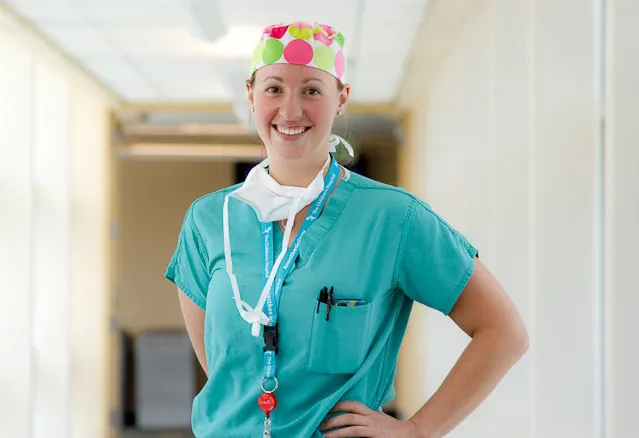
stethoscopes
Content Section

Nina Jean was a rancher’s daughter, who passed down the value of working hard and helping others. She was the kind of grandmother who let you pick out whatever sugary cereal you wanted in the grocery store and who baked an extra pumpkin pie at Thanksgiving so you could eat it for breakfast the next morning.

“And she was the most stylish Grammy on the block, with the perfect hand bag and the best shoes,” says Sarah Milliken Glabe, MD. “She had a way of always making you feel special, whether you were in her presence or miles away.”

In honor of her Grammy, Sarah gives $175 every year to the Medical Alumni Association Stethoscope Fund at CU Anschutz Medical Campus.  

Every $175 buys a stethoscope for a first-year medical student at CU. Since the late 1990s, thousands of CU medical students have received stethoscopes at an annual ceremony to welcome them to School of Medicine and to the beginning of their medical careers.

“I felt impacted by the gift of a stethoscope when I was a medical student, and I hope that same impact is felt by students who come after me.” Sarah said. “It’s a reminder of the physicians we all have come to medical school to be and hopefully be in our careers after we leave.”  

When Sarah was a first-year student in 2004, the medical school was still at Ninth and Colorado in Denver. Each student invited only two guests because the auditorium was small, and the happy crowd was standing room only. One by one, Dean Richard Krugman, MD, called the students to the stage. A professor gave Sarah a white physician coat and put a stethoscope around her neck.

“It was the first real feeling that I was a doctor,” Sarah said. “To this day the stethoscope serves as a reminder of why I got into medicine in the first place—that compassion and empathy with each patient is needed.”

Especially when the patient is your Grammy.

When Nina Jean was dying of bladder cancer, the doctors who treated her were “the kind of physicians who take a little extra time even when their schedule probably says not to,” Sarah said. “That intimate connection between you and the patient is so important. They allow you to be a part of their care, especially in what can be a scary and vulnerable time in their life. I think about how difficult my grandmother’s life was at the end, and the kindness and patience of these doctors really meant something to her, to my mom and to me.”

Now Sarah is the one standing on the stage at the White Coat Ceremony handing out stethoscopes to students as part of the Medical Alumni Association.   

“I still have my stethoscope from CU. It was the stethoscope I first used, and I won’t ever get rid of it. Who knows? Maybe 50 years from now it will be found by one of my grandchildren and it will connect me to them.”

Campus